Reclaim Rent Control for the People: Civil Rights in the 21st Century

If you haven’t been paying attention to the news, racism didn’t end in the 1960s with Reverend King. And I’m not talking about your mom and pop racism of yelling at the TV screen, I’m talking about systemic racism, institutional racism that continues to perpetuate all aspects of American public policy.

While the story of the Affordable Housing crisis and Gentrification crisis have gotten some press recently, news media is still slow to cover the clear and specific ways that racist housing policies have continued to hurt Black and Brown communities.
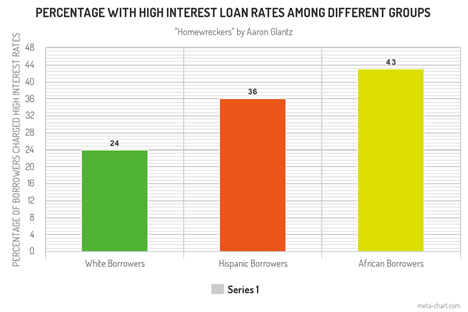
In a new book by Aaron Glantz, Homewreckers, Glantz highlights the ways in which the extremely wealthy have preyed on Black and Brown communities since the 2007 Financial meltdown. Targeting vulnerable communities preyed on victims and then foreclosed on them, forcing them to become renters or become homeless.

He writes, “Pressing people of color to pay higher and higher rents…ultimately transferred wealth from their communities.” While chattel slavery may have ended, the exploitation of Black and Brown communities continues today.

In the same vein, Black and Brown communities continue to resist. Recently, a coalition of tenants, activists, legal organizations, unions and academics came together to fight for DC renters’ rights with #ReclaimRentControl. Stephanie Bastek, a renter in DC and an organizer with the DC Tenants Union said that “DC has one of the fastest whitening zip codes in the country.” Gentrification is pushing poor Black and Brown communities out, but now they’re pushing back. At a hearing for the new Rent Control Bill, over 100 people testified in support.

Juanita Haynes of the DC Tenants Union shared her own personal story in her testimony, “As a retired RN I am on a fixed income and rent control is what allows me to live in an increasingly unaffordable city.”

Bastek told me that rent control helps all renters in the area, protecting families and preserving communities, which helps mitigate gentrification.

Joshua Armstead, a union vice-president, told me he supported the bill because, “both struggles[labor and housing] are the same. If a worker is making $19 and above, but their rent keeps going up, then we will keep getting stuck.”

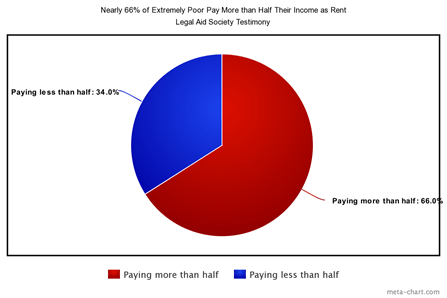
Lawyers from the Legal Aid Society, Beth Mellen Harrison and Amanda Korber, whose clients include many of DC’s poorest, Blackest tenants in Housing Court, added that “Rent Control would benefit low-income households…particularly those of older residents, women and people of color.” At a time when 2/3rds of the extreme poor in DC pay over half their income as rent, salvation is deeply needed.
Beatrice Evans, a DC-based tenant, said, “I’ve paid my dues to DC, and DC should invest in tenants like me. Because we are the heart of this city.”

Image
Beatrice Evans testifies before DC Council on 11/13/19

An astounding 8 in 10 DC residents support expanding rent control, according to a recent WaPo poll.

Its time DC government stood with the People of DC, and supported its poorest residents, along with all Black and Brown communities that call DC home.
So you wanna protect Black and Brown communities…now what?

In a world with ever increasing inequality, people are starting to rise up and demand justice and equality. Everyone has a part to play, and I want to highlight some ways people can and are helping liberate poor people, particularly poor Black and Brown people, from oppression.

Philip Íjgyártó, a communist organizer in Northern Virginia told me that he hopes to organize a tenants union in his apartment complex because when tenants organize together, they win.

An intern with the DC Jobs with Justice, Alexis Jade Ferguson, told me,“[Tenants] tell me about all the crappy unaffordable housing and displacement that happens in DC.” Asked about the current government, Ferguson noted, “Mayor Bowser is not anti-gentrification…[she] is one of those politicians who think that they get to drop the rest of us.”

Alexis Jade Ferguson was able to be on the front lines of a Rent Strike rally that happened in early December in Columbia Heights. A Rent Strike is a way for oppressed tenants to get lazy, greedy landlords to meet their demands and fix problems in the rental community. At the rally, more than 40 tenants banded together, agreeing that until their landlord takes care of the mice, bed bugs, and damaged walls throughout the building, they will not pay rent.

Another way according to local organizers for everyday people to fight gentrification is through direct action, as in, “tear down those horrible “WE BUY HOUSES” signs that blockbusting predators put up around DC,” according to a retweet by @StompSlumlords, which is the social media page for the tenants rights project of the Metro DC DSA. This might be a good option for people who oppose gentrification in their neighborhood but haven’t yet been able to form a union in their own living space yet.

Indeed, this is a form of direct action, and helps slow the process of neighborhood gentrification. They don’t require electoral change, just your own two feet.

But there is also of plenty of stuff people can do at the ballot box to support Black and Brown renters. Because housing policy is dictated by government, some activists see political campaigning as an important way to achieve victory. According to Stephanie Bastek, many of the people on the DC council are in the pockets of developers and real estate moguls.  Bastek in our interview mentioned Brandon Todd, the Councilor for Ward 4 by name as an individual complicit in gentrification, deep in the pocket of developers.

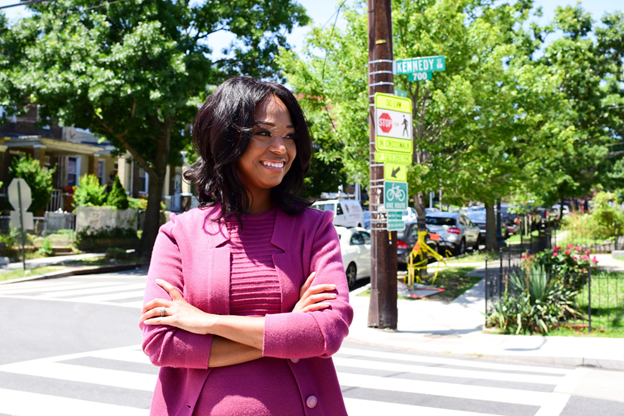
This upcoming election, Janeese Lewis Gordon, a Black lawyer, a native to DC, has challenged Todd for the Ward 4 Councilor position. According to Ms. Gordon’s political website, she is running on a platform of tackling the housing affordability crisis, hoping to keep communities together by supporting rent control.

Courtesy Janeese Lewis Gordon

Electing politicians who represent the interests of the communities that they serve could have a massive impact on Black and Brown communities in DC. Participating in Rent Strikes, forming solidarity coalitions with striking renters, or participating in direct action against gentrification can all be positive, creative ways for people to get involved in Black and Brown struggles against slumlords and gentrification.

DC Black and Brown Cultural Resistance: #YaddiyaForMayor

As poor Black and Brown neighborhoods become gentrified, Black and Brown residents are being priced out of the market, and out of their own communities. Black DC tenants have had enough, with @park7tenants, a collection of Ward 7 tenants, excoriating the mayor in a tweet for pandering to gentrifying White folk while displacing Black residents.   

Similarly, artists from all over the District are fighting back. Channeling the situation they’re seeing in their neighborhoods, Black and Brown creatives are moving for political action.

Yaddiya, a Go-Go artist and an organizer with Long Live Go- Go, has gone a step further. Responding to years of neglect from elected officials, Yaddiya teamed up with local artists and organizers like Joseph Orzal to plan a political campaign under the hashtag #YaddiyaForMayor. Orzal, who is a visual artist, crafted a series of political posters, working with the group Current Movements to build a coalition of DC activists who want systemic change for their communities.

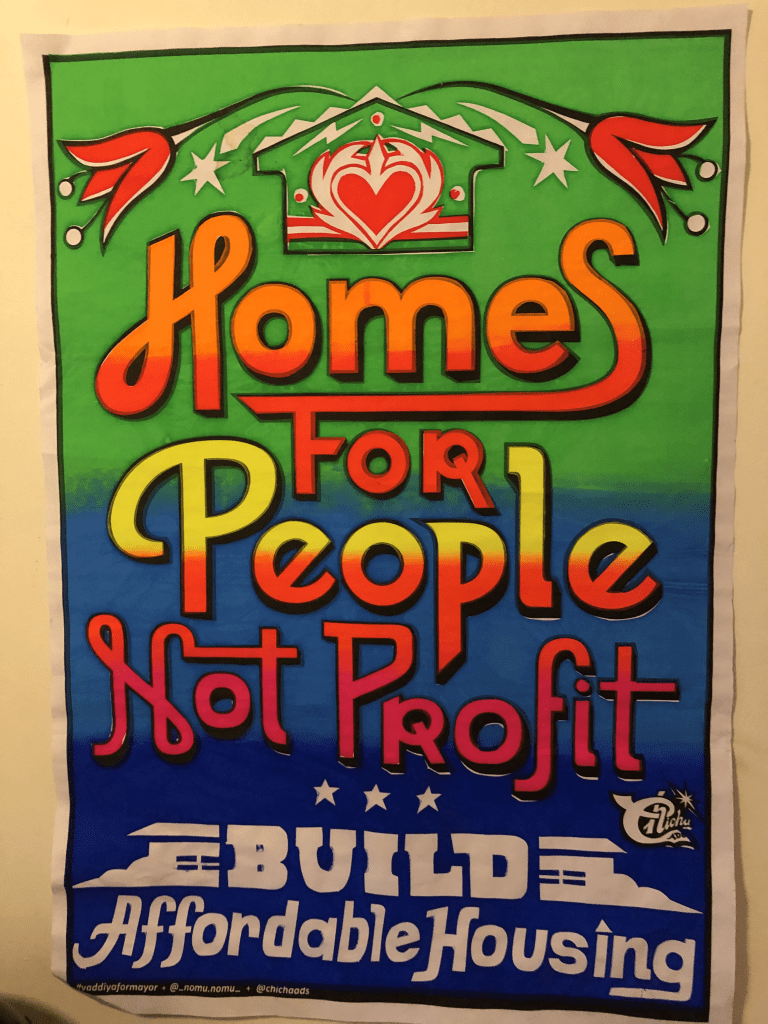
I got a chance to meet up with Orzal and ask him about the project. He told me that the campaign is Yaddiya’s idea and while the election isn’t until 2022, the duo is already making noise about the issues their communities are facing. Working from a song by Yaddiya, “Marion Barry,” which alludes to the charismatic leader and four time mayor of Chocolate City , Orzal went to work creating campaign posters with slogans like,“Invest In Black Youth Fully Fund Ward 7&8 Schools,” “Long Live GoGo, Keep Culture and Artists in DC” and my personal favorite, “Homes For People Not Profit: Build Affordable Housing.”

Photo by Jubilee Witte, Poster by Joseph Orzal

Orzal told me that his vision is to use art to connect people together. Tired of watching “DC get whiter and whiter,” Orzal tells me it like it is, “if you’re anti-poor, you’re anti-Black.”Orzal told me that his community isn’t represented in DC Council, and along with Yaddiya and other organizers, they are tired of seeing the people, businesses, music and communities that they grew up with disappear. As Yaddiya puts it in his song, “I got them very worried, that I’ma run for Mayor…Uptown don’t make no sense, who got 5k for the rent?”

Bringing together a community of activists, the Current Movements coalition brings together activists from across the city, and in a Facebook post called for six policies as part of a People’s Platform.

“1. ICE OUT OF DC- End Deportations & Detentions

2. WE KEEP US SAFE- Stop Over-Policing Our Communities

3.INVEST IN BLACK YOUTH- Fully Fund Ward 7 & 8 Schools

4. HOMES FOR PEOPLE NOT PROFIT- Build Affordable Housing

5. LONG LIVE GOGO- Keep culture & artists in DC

6. DC STATEHOOD NOW- Make DC the 51st State”

https://www.facebook.com/events/see-description/the-peoples-platform-poster-project/840623179674028/

Orzal and others want to see a DC Council that works for all people, not just rich, white dudes. DC natives fighting back to save their communities, saying Long live GoGo, and long live Black and Brown DC.

Design a site like this with WordPress.com
Get started